


Blackout on the Iberian Peninsula: ENTSO-E presents final report
After the blackout in Spain and Portugal in April 2025, the final report shows: Renewable energies and lack of automation played a role.
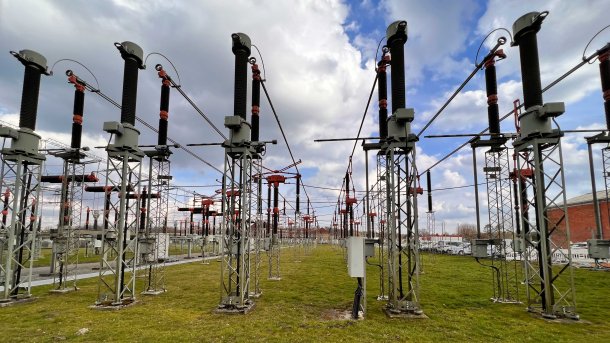
Substation in Bremen.
(Image: Andreas Wilkens / heise medien)
For Spain and Portugal, it was a catastrophe: Apparently out of nowhere, the power failed across the entire Iberian Peninsula and in a corner of France at noon on April 28, 2025. For some affected regions, it took up to 16 hours to get power back. And this recovery time was considered a masterstroke given the scale of the outage. Now, the European Network of Transmission System Operators for Electricity (ENTSO-E) has presented its final investigation report. It primarily revolves around the question of what grid operators, power producers, and authorities can learn from the incident.
The final report confirms what the interim report in October 2025 already stated: There was no single cause that triggered this massive outage. Among the recommendations is that solar power plants should help with voltage control in the future. Until now, they have provided reactive power according to a fixed factor.
The role of renewable energies
Renewable energies quickly came under suspicion after the outage, having contributed to it. According to the report, they contributed – as one of several interacting factors. However, conventional power plants, which supplied too little reactive power due to a lack of specifications , were an aggravating factor. The expert panel also believes that protection systems tripped too early, and the Spanish 400 kV grid, operating with a wider voltage band, had too small safety margins. Another problem: shunt reactors, which help to reduce excess voltage in the grid as compensation chokes, were switched manually – which was far too late given the lightning-fast sequence of events.
The actual catastrophe, which began at 12:32 PM, was triggered by a voltage surge in the grid, causing power plants to start shutting down. The event was preceded by grid oscillations, which were first triggered between 12:03 PM and 12:08 PM by a faulty inverter control and between 12:19 PM and 12:22 PM in the European interconnected grid. In the following minutes, grid operators reacted by reducing power exports to France and coupling power lines in southern Spain. This led to a voltage increase in the Iberian power system, and within 90 seconds, starting at 12:32 PM, the problems escalated due to a lack of automation and the aforementioned deficits, leading to a complete blackout. In that short period, around 2.2 GW of generation capacity was lost.
Videos by heise
Separation from the interconnected grid worked exemplarily
What worked well: The European interconnected grid was disconnected automatically, promptly and safely, so that not all of Europe was plunged into darkness. The restoration of the power supply also worked, although grid operators had to contend with all sorts of problems: Black-start capable units sometimes failed to start, and there were communication problems between several distribution system operators and major grid users. Some insights for the future could also be gained from this.
The experts conclude: Renewable energies did not cause the problems – but contributed too little to mastering them. In the future, solar and wind farms are to actively contribute to voltage stabilization instead of operating with rigid power factor settings. Protection settings must be standardized EU-wide and checked regularly. And manual interventions in the grid must be replaced by automation – because as April 28th showed, seconds count in an emergency.



(mki)

